
Legal Agreement Gives West Coast Fishers New Shot At Crucial Protections, Says EPIC
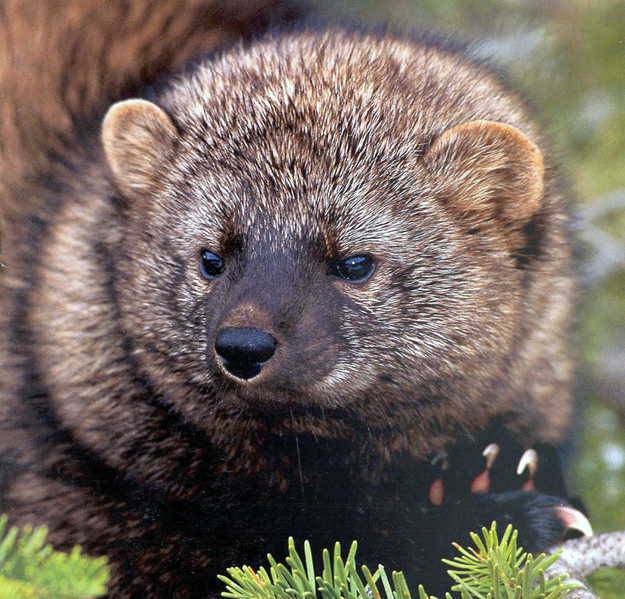
Fisher [Image from US Forest Service]
In a legal victory, the U.S. Fish and Wildlife Service [last week] agreed to reconsider whether West Coast fishers in northern California and southern Oregon warrant protection under the Endangered Species Act.
Fishers are relatives of mink, otters and wolverines, and live in old-growth forests. The Service has until Aug. 21, 2025, to decide whether to protect them.
“It’s great news that the Service is reconsidering its refusal to protect the elusive Pacific fisher, but waiting more than two decades to provide these protections is indefensible,” said Brian Segee, endangered species legal director at the Center for Biological Diversity. “These fierce, plush-furred forest weasels have few natural predators, but they’re no match for people logging and poisoning their old-growth habitat. Protecting them under the Endangered Species Act is more important now than ever.”
Organizations first petitioned the Service to grant West Coast fishers endangered species protection in 2000, leading to a 2004 determination by the agency that the fisher should be listed as threatened throughout its West Coast range. But rather than provide this protection the Service delayed, arguing there was a lack of resources.
The agency annually reaffirmed the fisher’s imperilment for more than a decade until 2016, when it abruptly reversed course and denied protection. After the groups successfully challenged that decision, in 2020 the Service granted protections to fishers in the southern Sierra Nevada but nowhere else. The current lawsuit challenges the denial of protections in the rest of the fisher’s habitat.
“This is our last, best chance to prevent extinction,” said George Sexton of Klamath Siskiyou Wildlands Center. “The combination of logging, rodenticides and fires have pushed fishers to the brink.”
West Coast Fishers once roamed forests from British Columbia to Southern California but now their U.S. range is limited to two native populations in the southern Sierra Nevada mountains, plus another in Northern California and southwestern Oregon.
There are also small, reintroduced populations in the central Sierra Nevada, in the southern Oregon Cascades, and in the Olympic Peninsula, Mt. Rainier and the North
Cascades in Washington state. The Northern California-Southwestern Oregon population — centered in the biodiverse Klamath-Siskiyou Mountains region — is the largest remaining one but is severely threatened by habitat loss and fragmentation caused by logging, high-severity fire and post-fire salvage logging.
“For over 20 years, we have fought for the West Coast fisher and its imperiled ecosystems. Our organizations won’t stop until the species is afforded the full legal protection that it deserves,” said Tom Wheeler, executive director of the Environmental Protection Information Center.


Join the discussion! For rules visit: https://kymkemp.com/commenting-rules
Comments system how-to: https://wpdiscuz.com/community/postid/10599/
And just how will they be protected? The protection will just be another tool to curtail private logging. While weed growers are and were the biggest offenders of all.
So many more acres of land are affected by logging than pot growing. Both practices are done irresponsibly.
Not in old growth forests but one difference as always is the loggers get plans approved with mitigations, come, disturb the ecology in patches then leave for twenty years. The illegal pot growers obviously get no permission but come anyway, disturb the ecology, stay for two or three years years, leave behind poisons and waste that is never cleaned up. And there are so many more of them. EPIC doesn’t look for them though. That would be awkward.
Most mammals and many birds love loggers. The predators especially have a soft spot for them.
When you clearcut or thin selectively you are creating an environment where grass, berries, seeds, browse brush and many other food plants for animals thrive.
More sun on the ground around here prompts a big surge of biological diversity and population in plants and animals, including a lot of things a fisher likes to eat.
Logging creates a wonderland of plants growing and animals running around eating each other. Isn’t that what we want?
Only an ignorant fool could think that weed growing has been more devastating than logging.
There’s lots of weasels in ‘The Deep State’
Deep State? Didn’t that particular paranoid delusion die with Ted Kaczynski? Oh no, the Orange Idiot carries that flag now ??
Soros’s son. Ted didn’t use guns, no bait for the gun haters, the only thing positive
Very few smaller weasels either. That’s why California is run over with gophers in some areas. Weasels are very good at eating chickens which is why they were eradicated in some areas. Fishers will also kill house cats and eat them. A friend of mine has seen one doing this in a downtown area in FB.