
HappyDay: ‘So Come the Days of Summer’
Casey O’Neill is a cannabis and food farmer in Mendocino County who has been writing newsletters about his efforts to provide sustainable produce and marijuana. We feature his column once a week.
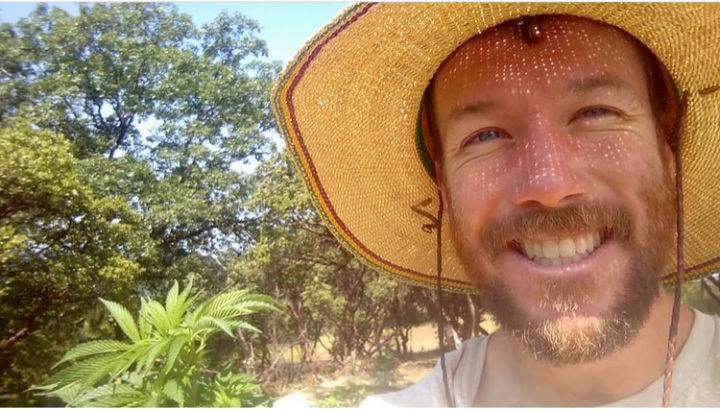
So come the days of summer, hot, drying winds suck the moisture from the earth as the grasses turn brown and the landscape takes on a bleached, tan look. And yet, the gardens and pasture are still patches of green, oases that we tend and steward to produce the summer abundance that grows with such riotous abandon. This time of year I am an agent of water, my time spent in service to the movement and application of this glorious miracle.
Hydrology is complicated, and I’m no expert, but over the years we’ve learned to troubleshoot a million and one problems with water systems. Leaks, broken lines, air locks, bad timers, clogged filters, blown pump lines, the list is endless. This year is shaping up to be a very dry one, and it’s difficult to articulate how grateful we are to have the giant storage tanks put in by the CDFW grant through the Mendocino County Resource Conservation District and the tenacity of Mainspring Consulting.
The level in our irrigation pond is dropping precipitously, and in any other year we’d be scaling back our plantings and I would be making plans to cease farmers markets in the fall for lack of production due to water limits. With the recent heat, I’ve been reflecting that water has always been the biggest stressor for our farm; every year we’ve had issues with not having enough to irrigate, creating tension and difficulty between us as we each navigate leadership on our different crop production cycles.
The vegetables use more water than either the cannabis or the flowers, and the salad mixes require overhead sprinklers to keep them cool so they don’t turn bitter during the heat. When water is low or there are air locks/other pressure issues then there isn’t enough oomph to push the sprinklers and I struggle with the stress of the silent screams of wilting plants and my feelings of impotence to do anything about it.
There have been so many times where I had to make the hard decision about which crops to cut off, which beds not to replant, which plants didn’t get to drink that day. Farming in a hotter, drier world requires adaptation and new partnerships, and I’m deeply hopeful for more of these types of water storage grants to support farms to produce more and build greater food security for our local communities. I’m also keenly aware of the economic potentials, that with the additional water we’ll be able to grow through the fall, keeping our farm operating by bringing in needed money.
The new tanks also provide water for the native plants provided by the grant through the RCD, which we planted in new swales we prepped. I’m excited to see what these plants will do, and I’m looking forward to increasing my knowledge about native plants and being able to gather seed from them for future plantings. These new swales, along with the hedgerows we planted at the ranch through the Point Blue Roots Grant have created a huge opportunity for us to learn about and propagate native plants, along with providing the water resources to make sure the plants are able to thrive.
The other aspect of the additional water storage is our ability to plant cover crops in the fall. In the last 10 years we were delayed or even unable to sow cover crops in 6 of them due to late fall rains and/or low water supplies. When we’re able to plant immediately after harvest of cannabis and other summer crops, then we grow thick, lush stands of cover crop that sequester carbon and build soil, benefiting our farm directly while fitting in a small piece of regenerative agriculture as part of the Green New Deal.
A core part of the practice of my worldview is to build relationships that create systems for landscape level thinking that employ people to do good work to steward the earth. When we work together, there are deep opportunities to benefit communities impacted by the loss of cannabis dollars to tend forests, foster grasslands and produce food. It takes a lot of meetings, phone calls, discussions with agency staff and paperwork, but open communication channels and human relationships are the way that we navigate building a better future.
Dawn breaks as I finish my coffee and get ready to head out to water the propagation house and the recent, tender plantings. Water is life, and I’m grateful to serve as its conductor, making sure it arrives to sustain the plants and animals in our care. As always, much love and great success to you on your journey!


Join the discussion! For rules visit: https://kymkemp.com/commenting-rules
Comments system how-to: https://wpdiscuz.com/community/postid/10599/
Your writing reminded me of that Kate Wolf song Here in California. Thank you for being here.
https://youtu.be/DH9QnQdoKtY?is=7y8ckA0UyifSpAgz
Thank you for sharing that song!
Beautiful.
I’ve bathed in Cris Williams’ music since I was young, (long ago), but wasn’t exposed to Kate.
Thank you for the introduction.
You are so very welcome.
🙂 this article makes the second time today I am reminded of Kate.
First time: Read Sundar Pichai’s 2026 Commencement Address at Stanford University https://blog.google/company-news/inside-google/message-ceo/stanford-commencement-speech-2026/
Ever see Kate & Nina live? Also saw Kate solo in Berkeley, in 1985 or 6.
Sadly no. I was still a teenager in Alabama then. I didn’t even get to go to the Kate Wolf festival. By the time I got my life situated enough to go they stopped holding it. I didn’t get to get to hardly any shows. I’ve always had children to tend to or work to go to. Thank god for radio, records, and YouTube.
Yes. Water is key. Life.
Those tanks would be a wise investment by the county for all business farms. The fact that it makes the difference in having produce for sale or not is significant. The local economy, as well as the bounty available to citizens, would reflect the investment.
I spent the first ten years in my home setting up water systems and building infrastructure.
Your worry about drip systems is familiar.
Now I am older and not strong, but the systems are in place and with a little maintenance I can be assured that the gardens are being watered in the wee hours.
A management course, years ago, taught me “When instituting a new system, initially it takes 10 amounts of energy to create the system to get one unit back. But, after the system is in place, it takes one unit of energy in to get ten units back.” i,e, drip systems and timers.
Now my foster son is able to maintain the systems I set up with mostly just routine observation.