
[Update: Grief Counselors Available] Celinda Gonzales, Suicide Prevention Advocate in Weitchpec, Identified by Family as Among the Deceased in Lewis Road Investigation
 A family member has confirmed that Celinda Gonzales, a well-known suicide prevention advocate in the Weitchpec area, is one of the two people found deceased during an ongoing death investigation on Lewis Road.
According to the Humboldt County Sheriff’s Office, deputies responded at about 8:47 p.m. on February 3 to a residence in the 900 block of Lewis Road following a report of a possible murder-suicide. Upon arrival, deputies located two individuals deceased inside the home. Sheriff’s officials said the incident appears, based on preliminary information, to be consistent with a murder-suicide.
Gonzales was widely recognized in her community for her work in suicide prevention in Northwestern California. In a 2020 CalMatters report, Gonzales spoke openly about the overlapping pressures facing rural and tribal communities in Humboldt County, including wildfire threats, declining salmon runs, economic hardship, and limited access to mental health care. She described the emotional toll of those stresses and the importance of speaking directly and honestly about suicide.
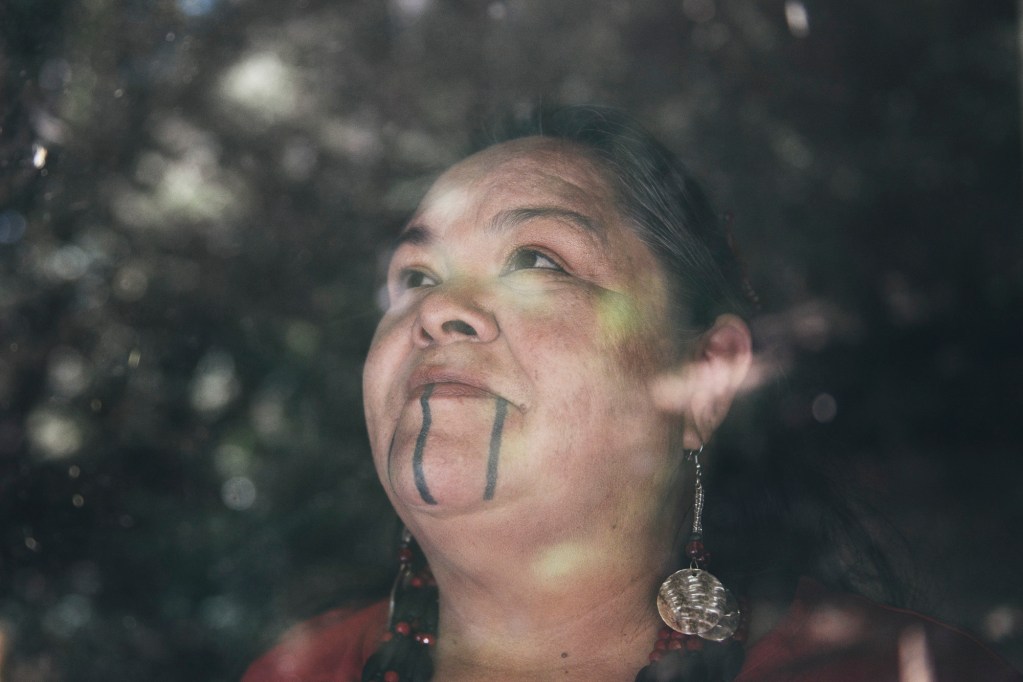
After losing both her teenage son and her brother to suicide, Gonzales dedicated herself to prevention work in and around Weitchpec, an isolated community on the Yurok Reservation. She trained in suicide intervention, worked with local agencies, and became a trusted point of contact for people struggling with suicidal thoughts. Even after grant funding for her position ended, she continued outreach informally, often checking in with community members through social media and personal connections.
In a statement following Tuesday’s incident, Yurok Tribal Police announced that it is working to establish grief counseling services for those impacted by the tragedy. Additional information about available resources will be shared as it becomes available.
Anyone with information related to this case is encouraged to contact the Humboldt County Sheriff’s Office at (707) 445-7251 or the Sheriff’s Office Crime Tip Line at (707) 268-2539.
Earlier:
- Law Enforcement Investigating Fatal Incident in the Martin’s Ferry Area in Northeastern Humboldt
- HCSO & Yurok Tribal Police Investigating Apparent Murder-Suicide
Update: The Yurok Tribe announced that grief counseling resources are available following the recent tragedy in Weitchpec. United Indian Health Services grief counselors will be available at the Weitchpec Clinic, located at 23001 State Route 96, and can be reached at 530-625-4300. Additional grief counseling is available upon request by contacting Shoshoni Hostler at 707-499-2574. Community members with questions may contact Yurok Tribal Police at 707-482-8185.
Mental health ‘tsunami’ looms: Can California prevent a surge in suicides?
By Jocelyn Wiener, CalMatters

This story was originally published by CalMatters. Sign up for their newsletters.
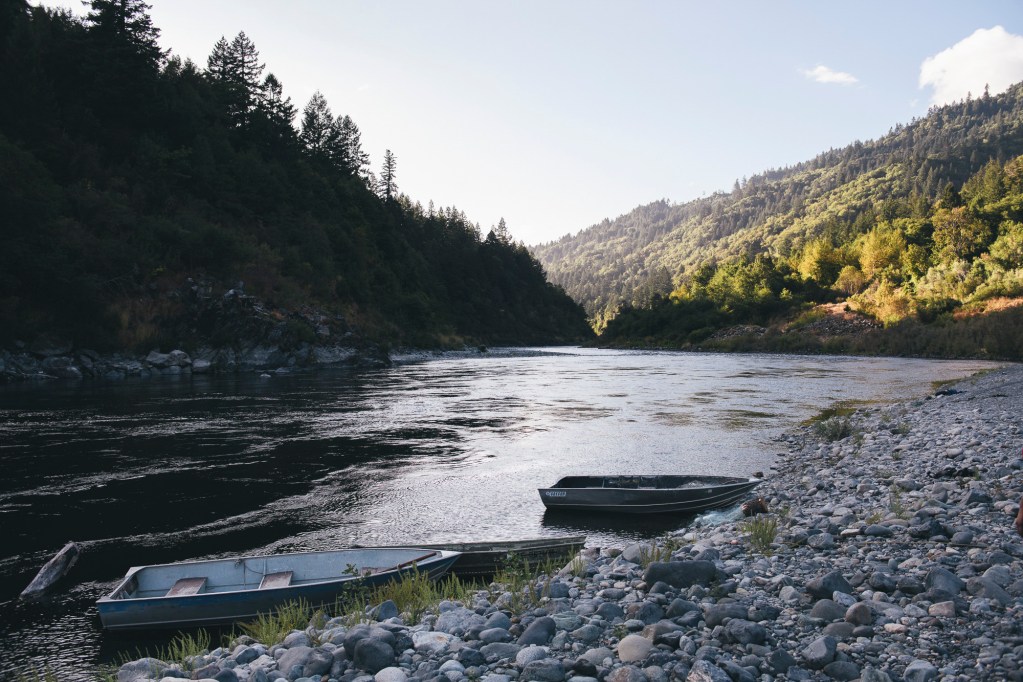
Celinda Gonzales has a long list of worries: She worries about COVID-19, which recently spiked near the Yurok reservation where she lives in Humboldt County. She worries about the wildfires threatening her remote, forested town, Weitchpec. She worries about gill rot and algae blooms in the Klamath and Trinity rivers, which join together just over the hill from her trailer; she worries, too, about what the resulting small salmon runs mean for her financially struggling community.
And she worries about the prospect of more suicides.
“It’s very hard to stay mentally strong right now,” she said.
For several years, Gonzales, 53, has worked in suicide prevention in the northwestern corner of California, famous for its rocky coastlines and breathtaking forests. It carries the burden of another reputation – about 2 and a half times as many of Humboldt’s residents die by suicide per capita as the rest of the state.
That weight is felt across this county of 135,000, as well as in many neighboring rural counties, where mental health providers are in short supply.
Now, in this region and across the state, the pressures of the pandemic and economic downturn, compounded by racial tensions and climate-change-fueled megafires, are amplifying that concern. Gun sales are up nationally, including in California, according to a recent FBI report on firearm background checks. Experts worry substance use here may also be increasing. Individually, these factors are stressors; together, they’re a powder keg.
“We are very concerned about the layering of multiple stresses on the people of California,” said Jim Kooler, assistant deputy director of the state Department of Health Care Services’ behavioral health division. He describes the current moment as having “challenges on top of challenges that we’ve never had to face before.”
Adding to these challenges: The state has a decentralized public mental health system, which can make a concerted statewide effort to address suicide even more challenging.
A bill to create a statewide Office of Suicide Prevention was signed into law last Friday by Gov. Gavin Newsom. But there was a big caveat: At this point, there’s no money for it.
Meanwhile, pressure is building. Mental health leaders in the state are now commonly defaulting to the word “tsunami” to describe a predicted onslaught of mental health needs and suicides, which many believe will last long after any vaccine is distributed.
Historical precedent amplifies this sense of urgency. In the years following the last recession, an estimated 4,750 more Americans than projected died by suicide, according to an analysis published in The Lancet.
Nationally, rates of anxiety have already tripled and rates of depression have quadrupled compared to a year ago, according to a report by the Centers for Disease Control and Prevention. One especially sobering finding: More than a quarter of the nation’s 18- to 24-year-olds reported seriously considering suicide in the last 30 days.
Monthly calls to a suicide prevention crisis hotline run by Sacramento-based WellSpace Health, which serves much of the state, almost doubled this year compared to a year earlier — up from a little more than 3,000 for June 2019 to almost 6,000 in June 2020.
“The psychological impact of COVID cannot be underestimated,” said Jonathan Porteus, WellSpace’s chief executive officer.
One of the main words he said they hear from callers: “hopeless.”
A county searches for answers
Humboldt’s high suicide rate can be traced to a combination of factors: gun ownership, low median incomes and the precipitous decline of work in the logging, construction, fisheries and manufacturing sectors, mental health leaders there say. Heavy opioid and prescription drug use is also a key element — the county’s overdose death rate is often more than triple the statewide average, according to a county report, and is especially high in the Native American community.
For Native American residents like Celinda Gonzales, who make up more than 6% of the county’s population, historical and ongoing trauma and suffering are also significant, said Virgil Moorehead, a clinical psychologist and executive director of Two Feathers Native American Family Services.
“I don’t want to frame it as a mental illness,” he said. “I would frame it more as existential despair.”
Access to mental health services in Humboldt County is a problem, too, said Dr. Robert Soper, who heads a countywide behavioral health consortium he started five years ago. Soper, 71, said he is the only private psychiatrist left in the county. For years there were five, he said, but as his colleagues retired, no one replaced them. Being so remote from major cities makes it difficult to recruit, he said.
“If I could find someone good, I would have them in a heartbeat,” he said. “They would be full before they walked in the door.”
In 2016, the county’s civil grand jury received several complaints about the county’s mental health branch, with staff and local mental health advocates reporting “dysfunctional work guidelines, distrustful working relationships, unresponsive upper management, mass resignations, and an unsupportive work environment.” In its investigation, the grand jury found the county’s behavioral health board had done little to improve those conditions.
The county’s behavioral health director, Emi Botzler-Rodgers, told CalMatters her office has been “working diligently to change our branch culture” and improve staff morale. And Soper notes another important development: the county now has a mobile crisis team that can quickly evaluate people.
Two years ago, health officials in Eureka, the county seat, decided to make a concerted effort to address the county’s high suicide rate.
The department brought in an epidemiologist, Dr. Kimberly Repp, to help create a suicide fatality review process modeled on one she successfully built in Washington County, Oregon. That county brought its suicide rate down by 40% in just five years, Repp said.
“I don’t want to frame it as a mental illness. I would frame it more as existential despair.”
Virgil Moorehead, clinical psychologist
Working in partnership with the coroner’s office, the sheriff’s department and other agencies, a county team used Repp’s method to study 250 suicides from the previous five years.
Noting the growing numbers of gun purchases in the area, the team began building relationships with gun shop owners, distributing lockboxes and suicide prevention information to be given out with all sales.
Aaron Ostrom, co-owner of Pacific Outfitters in Eureka, called the program “extremely beneficial.” Normally, such lockboxes cost $30, and not everyone opts to purchase one, he said.
“During COVID we saw a huge surge in first-time gun owners, with people getting nervous and freaked out,” he said. While longtime owners often know the importance of safely storing a firearm, he said, new gun owners might leave them, unsecured, in nightstands or closets. A study published in The New England Journal of Medicine in June found that California handgun owners are much more likely to die by suicide than non-owners.
Dana Murguia, a senior program manager with the county who leads the task force, is a proponent of asking more people the difficult question: “Are you thinking of suicide?”
“The more you ask it, the more opportunities you have to help someone,” she said. “All of us have more opportunities for that, given what people are experiencing right now.”

Moorehead’s efforts are also gaining attention. Three years ago, he moved back to Humboldt County from Stanford University, where he had worked as a staff psychologist. He and his team recruited local Native American college students to build relationships with the young people they served. Over a year and a half, the organization went from seeing 5 to 10 kids a week for counseling, to 50 or 60. The staff grew from four to 28.
“We went up there and said ‘Look what’s possible,” Moorehead said. “We’re reaching those kids and we’re reaching them in a meaningful, deep way.”
The efforts in Humboldt started drawing state and national attention.
On March 5, a high-powered coalition of state officials, along with various federal and tribal leaders, converged in Humboldt and met with Moorehead’s team.
One former Newsom administration official who joined the delegation described their work as “amazing.”
Then the pandemic blew up.
California lacks centralized leadership
Half a year later, can California change its worrisome projections?
Experts on suicide say some straightforward solutions are available: Get people to lock up their guns and dangerous medications. Prevent access to train tracks and bridges. Make sure there are culturally relevant local interventions — the kind of work Celinda Gonzales and Virgil Moorehead do.
More challenging to address are all the deep economic and social drivers of suicide being aggravated right now — isolation, eviction, job loss, homelessness, chronic illness.
“When people come to me and say, ‘I lost my job. I couldn’t pay my rent. I got kicked out. I’m living in my car with my kid and my dog. My kid is trying to do distance learning from the car and I’m going to lose the car.’ I can’t go ‘Here take this pill, you’ll be fine,’” said Dr. Amy Barnhorst, a psychiatry professor and vice chair for clinical services at the University of California, Davis.

California has lacked strong centralized leadership on suicide prevention for years, many mental health leaders agree. The state did have an office of suicide prevention years ago, said Kita Curry, who recently retired as president and CEO of Didi Hirsch Mental Health Services in Los Angeles. But even before the Department of Mental Health folded in 2012, she said, the office was “dying through attrition.”
“It kind of gradually disappeared,” she said. “I don’t know if anybody knew it was gone.”
California’s suicide rates have traditionally been lower than many other states’ — in part due to lower gun ownership rates here. But suicide rates also have been gradually climbing in California, as in the rest of the country, for the past two decades.
In January, the state’s Mental Health Services Oversight and Accountability Commission released a five-year strategic plan for suicide prevention. Among the measures it called for:
- Creation of a statewide Office of Suicide Prevention
- Expansion of the state’s Violent Death Reporting System
- Standardized suicide prevention training for providers in hospital settings
- Expanded screenings in other health care settings
- Uniform policies for hospital discharge for people who have received suicide-related services
On Tuesday, the California’s state auditor released a report saying that school districts lack both the resources and policies needed to address climbing suicide rates among young people.
In response to the pandemic, the state Department of Health Care Services is now undertaking an effort, CalHOPE, to conduct a public awareness campaign, connect more people to mental health phone lines and bring those who need it into the mental health system. So far, the state has received $3.2 million from the Federal Emergency Management Agency; their broader request — if approved — would bring in up to $82 million more.
Assemblymember James Ramos, the first Native American enrolled in a California tribe to serve in the state Assembly, authored the bill this year to establish a new Office of Suicide Prevention. The office would identify and disseminate best practices, track and analyze outcomes, and focus more resources on preventing suicides in high-risk groups. With no money in the budget, there isn’t likely to be a statewide entity this year. But the bill’s supporters believe it’s an important first step for all Californians, including those living on reservations.
“The human soul is very sensitive,”said Ramos, who grew up on a reservation. “When you start to look at what it is we’re facing, it can become very disheartening.”
A mother’s story
Celinda Gonzales, who lives with her husband and pets on the Yurok reservation, has faced down tragedy for years. She lost her son, Paul, to suicide, when he was just 19. A handsome boy with an “off-the hook” sense of humor and a promising future in mixed martial arts, Paul, she said, “was our glue.”
Paul had been talking about taking his life since he was little, Gonzales said. She sent him to a counselor for a while, but after the counselor retired she struggled to get more help.
Her 43-year-old brother, Gaylord Lewis Jr., died by suicide five years later, in 2014.
Soon after that, other young men in the densely forested town of about 350 began to die. Within 18 months, the Yurok tribe tallied seven suicides in the Weitchpec area. The tribe declared a state of emergency and began applying for federal grants for suicide prevention.
For a long time, many people in the county’s Native American communities struggled to even say the word “suicide,” said Boyd Ferris, behavioral health director of the K’ima:w Medical Center, which serves Hoopa tribal members.

Wanting to do more, Gonzales undertook an intense, emotionally draining suicide intervention training, learning what signs to look for, what protocols to follow, where to turn for help.
“We have to take this serious,” she’d tell her neighbors. “There could come a day when they actually do follow through.”
Gonzales’ friend, Elizabeth Azzuz — the two are so close they consider each other sisters — lost several loved ones in that suicide cluster.
“I said, ‘We really, really need to do something. We’re suffering here,’” Azzuz said.
She felt the community needed someone with firsthand experience to do outreach, and convinced Gonzales to apply for the suicide intervention specialist position. Gonzales trained local police and fire departments and taught her neighbors not to assume their loved ones were “crying wolf.”

With the pandemic, community barbeques have stopped, as did the annual suicide walk. Also canceled were a host of summer dances and child healing ceremonies that have served as a centering force for many Native Americans.
Moorehead’s organization, Two Feathers, pivoted to move their outreach online. But often only 5 or 10 kids joined, instead of the 60 or 70 they were seeing pre-pandemic.
Some tell Moorehead they have suicidal thoughts 15 out of every 30 days.
“I think we’re playing with fire,” he said. “The communities it’s hitting the hardest are the ones that are already struggling.”
“The human soul is very sensitive. When you start to look at what it is we’re facing, it can become very disheartening.”
Assemblymember James Ramos
Elsewhere in the county, too, the pandemic is having effects. Dr. Soper, the private psychiatrist, said many people stopped taking psychiatric medications in the spring, and began drinking and using drugs more heavily. Now, he’s seen up to 10 emergency psychiatric holds in a single day — normally, there might be three or four.
When the 16 local psychiatric hospital beds fill up, providers have to scramble to send people to hospitals hours away — and concern about the virus is making that increasingly difficult, he said.
Neighboring counties are struggling with similar problems. Recently, Jenine Miller, the behavioral health director of Mendocino County told her county board of supervisors that suicides in the first eight months of this year have already surpassed the total number of suicides in the county in 2019. She noted that depression, anxiety and substance use are also on the rise there.
“One of the common things we’re hearing people state is that while they may be surviving, they’re no longer living,” Miller said.
Resilience amid despair
Celinda Gonzales knows her community is resilient.
“They’ve survived wars, floods, fires and landslides,” she said last week, as she and her neighbors braced to evacuate ahead of the Red Salmon Complex and Slater fires. Her niece had already lost her home in Happy Camp days earlier.
Despite the fires, the pandemic, the small salmon runs and the generations of adversity, Gonzales feels certain her people will find their way through this moment, too.
For Gonzales, the federal grant funds that paid for her suicide intervention position ran out last year, but her phone never stopped ringing. On her own time now, she makes a point of checking in with the community via Facebook; her grandson keeps an eye on his friends on Snapchat and Instagram and tells her if anything seems amiss.

A few weeks ago, a young man she’s known for years attempted to end his life. She believes there are plenty of others contemplating the same.
She knows, too well, the reverberations of that kind of pain. Her son’s birthday was this month. He would have been 31.
If you or someone you know is having thoughts of suicide, help is available. Call the National Suicide Prevention Lifeline 1-800-273-8255 (TALK) for resources and support. Free, confidential, available 24/7. Text “HOME” to the Crisis Text Line—741-741—to reach a trained crisis counselor. Free, confidential, available 24/7. For more information and resources, visit: https://www.speakingofsuicide.com/resources/
Our health care reporting is supported by the California Health Care Foundation, Blue Shield of California Foundation, and the California Wellness Foundation.
This article was originally published on CalMatters and was republished under the Creative Commons Attribution-NonCommercial-NoDerivatives license.


Join the discussion! For rules visit: https://kymkemp.com/commenting-rules
Comments system how-to: https://wpdiscuz.com/community/postid/10599/
This is an incredibly sad and heartbreaking story. My condolences to all her family and friends.
I am so terribly sad and sorry for this family’s loss. This woman was a champion. How can we end the suffering on the Hoopa reservation? How can people feel better about life? Something desperately needs to change. I have seen countless young people’s obituaries from the area, it needs to change. Big love for these people.
“The county’s behavioral health director, Emi Botzler-Rodgers, told CalMatters her office has been “working diligently to change our branch culture” and improve staff morale. And Soper notes another important development: the county now has a mobile crisis team that can quickly evaluate people.”
What a joke.
This is a bold-face lie.
County morale is abysmal and nothing is being done.
Its CYA over any actual assistance.
The CalMatters story was from 2020. Not that anything’s improved.
My sincerest condolences to those who knew her and members of her community. I read this story as a message of hope for those who’s lives she touched. My grandmother suffered terribly in her life but remained an optimistic force for all of her grandchildren. She said, “never give up” and “if you ever think of giving up, remember me.” I know this is the same thing Celinda would have said to the people she loved and cared for in her life.
I have personally always admired native culture, traditions, and spirit (I am not native myself). For years I have pondered on why the tragedy continues to impact the lives of the people that held universal truths, divine wisdom, and stewarded this beautiful land for millennia. It will be up to the people themselves to find these answers. But I do know that we can no longer be separate Americans. Opportunity should flow to and from these communities and we can all do our part to change this narrative.
i found my mother 3 times and saved her from suicide as a kid. Even going through it with her I find myself thinking of suicide. She eventually succeeded when I was 16. Sometimes it just seems like the easy way out. No more feeling unimportant, loneliness, and feeling unloved or that you’re not enough for the people you love. It’s something personal, no one else’s fault but instead insecurities in one’s self. The flip side is who you leave behind and how they feel, could I have saved them in some way. The guilt is somehow unbearably concerning. I know I was that person.