
50 Miles from the Freeway: Burnout
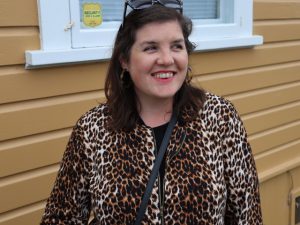
Linda Stansberry is a writer and journalist from Honeydew, California. 50 Miles from the Freeway is her syndicated monthly column about rural healthcare. Send questions, comments and news tips via her website, www.lindastansberry.com. You can also follow her on Twitter: @LCStansberry
Burnout is like a bad relationship, the kind you keep finding yourself in again and again despite being sure you knew how to avoid it this time.
“Oh no, this again?” You might think to yourself one Sunday night as you realize for the thirty-sixth week in a row that you’re dreading the morning, that you don’t feel like you’re rested at all, that the thought of going to work the next day makes your body flood with stress. Yeah, you’ve been here before. There’s a word for it, one your friends or your spouse or — if you’re lucky — your boss said when they saw you slowly losing it: Burnout. Maybe you listened to them and took a vacation or maybe your body decided for you and hit you with a migraine or back-to-back colds, and maybe after taking that rest you felt temporarily better, but here it is again. This constant state of wariness and weariness. Telling your friends that you’re too busy to hang out because you just don’t have the energy to talk to another human. The feeling that a giant to-do list is hovering over you at all times, not just your work tasks but the house that must be cleaned, the family that needs your care, the walk you haven’t taken or yard you haven’t mowed. Just thinking about it all brings on a wave of exhaustion.
What does burnout have to do with rural healthcare? Only everything. In the absence of adequate systemic support, we rely on a patchwork of professionals, neighbors and volunteers to take care of us. Volunteer firefighters protect our home and communities. Rural community centers keep us fed and offer access to services. Non-profits work for economic and ecological stability. Clinics try and fill the gaps of our inadequate healthcare system. Teachers are the first responders to children who are abused, neglected, impoverished, malnourished or intellectually disabled.
And you know what? All of these people working in your community are tired. They’re all trying to do a lot with a little, and I haven’t met anyone recently who feels like they’re killing it. More often than not, it sounds like their work is killing them. This is especially true for my parent friends who are trying to work and raise, you know, the future of our country at the same time. Oh, and, also — my farmer friends? I see you. This sucks.
Burnout is essentially a state of long-term exhaustion that occurs when the demands of a job or situation outpace your ability to cope with it. You become physically tired, emotionally drained, cynical, disheartened. It wrecks your health. Your literal brain chemistry changes, in part scientist believe due to sustained levels of cortisol. Cortisol is that fun stress chemical that our bodies are supposed to use to help us run away from mountain lions but in the modern world causes our heart to start racing when we see an email with a passive aggressive subject line. And when your body is full of fight-or-flight chemicals all the time, sometimes you start doing dumb things to regulate. Like drinking too much. Or smoking too much. Or eating too much. Or saying “yes” to more work (my favorite) because…well, I’m still not totally sure why I do that. Because I’m an approval-seeking machine? Anyway. When you’re eating, smoking, drinking and/or working too much and instead of taking time to do kind things for your brain and your body like exercising, meditating, eating real food and resting and you’ve got a bunch of chemicals on board that are wreaking havoc on your heart and immune system, you’re going to screw up your health. And, in case you haven’t noticed, we don’t have great access to healthcare here. Also, like it needs to be said, our local healthcare professionals? Super burned out.
So, what do we do? Well, let’s start by facing the obvious: Working yourself to burnout makes your work worse.
In 2018 I took a hiatus from journalism to work as a communications professional. It was a decision I made for a lot of reasons, not least of which being that I had been covering a local healthcare issue that had made me rage-weep in my car several times and was tired of rage-weeping. About six months into my new job, I got a call from a friend, an ex-cop, checking in.
“You know,” I told him. “It’s the weirdest thing…I’m actually starting to give a shit about things again.”
“Compassion fatigue,” he said immediately. Huh. I’d never compare the stress of being paid to cover city council meetings to the stress of being a cop, but I’ve seen a lot of parallels in our professions in terms of what happens when we’re not able to handle the stress. We either figure out how to shut down the part of yourself that cares, deal with it by doing a lot of unhealthy things in our off-time or find new jobs.
He and I both found new jobs, at least temporarily in my case. Because I’m back to journalism. And I’m covering stories that make me cry. I’m really happy about that. I wish the situations that make me cry didn’t exist, but I’m happy that I still give a shit. And I’m trying to take better care of myself, because like a lot of people who get into caring professions — cops, nurses, counselors, teachers — journalists often have a hero complex about our work. Somebody has to do it. If I don’t do it, it won’t get done. And if it doesn’t get done, I’ll be letting everybody down. Which, you know, is true. Caring is sacred work. But you don’t have to be a martyr to do sacred work.
I’ve been interviewing a lot of cops recently for a story I’m working on (not the one that’s making me cry) and learning about the reckoning their profession is having with mental health. The book Emotional Survival for Law Enforcement by Kevin Gilmartin has been recommended to me several times. Gilmartin outlines the emotional deterioration that can occur from being in a constant state of hypervigilance and how to address it. I’ve also been reading a book that I highly recommend titled How to Keep House While Drowning by KC Davis, which suggests a “morally neutral” stance on life maintenance that is the perfect antidote to the ultra-productive, Pinterest-perfect approach which dominated our pre-pandemic life. And I’ve been reading a lot of things that make me cry, you know, for work.
What I’m doing differently, what we could all do differently, to combat burnout and compassion fatigue, is embracing community care rather than self-care. So I’m emailing my editor and telling him the truth.
“This is really hard to read, I need to take a few breaks, it’s going to take a while to finish this one,” I told him. Then I took a break and went for an extremely slow and redeeming jog. I talked to my coworkers who are going to read the story once it’s finished and discussed how we’re going to take care of ourselves. We developed a plan.
These are all best practices I learned from my work on a documentary about suicide prevention. Somehow, before it was suggested to me by the agency I’m working for, I’d never thought about developing a plan, or talking to other people about developing a plan to help us get through the hard parts of our work. What are we going to do when we’re triggered? What are we going to do when we find ourselves slipping into bad habits that don’t serve us or our health? How can we help the people we’re interviewing prepare for the hard parts too? What are we going to do when the stress or the emotional impact of our work outpaces our ability to cope with it?
So, my beloved community, my volunteers and teachers, cops and nurses, farmers and journalists, what’s your plan? Are you going to create space for a little rest? Are you going to leave those dishes in the sink and put your feet up? Are you going to join me for an extremely slow jog? You can rest without stopping. You can keep going once you’re rested. I’m counting on you.


Join the discussion! For rules visit: https://kymkemp.com/commenting-rules
Comments system how-to: https://wpdiscuz.com/community/postid/10599/
Some of us have had to make the choice; leave this shrinking community, or get a minimum wage service job to stay here and try to make it work. Oh and you can forget about selling your property, prices are tanking and it is only going to get worse. The Bulgi’s and the Hmong are dumping their land now, the market is flooded. There are no jobs. If you have a job, burnout is the least of your worries, starvation is what you are worried about.
Heros don’t always realize people recognize what they’re doing. It’s not always natural for us to offer the platitudes the folks we care about need to hear. You are one of my heros Linda! So keep up the good work, but only after goofing off a bit! Thanks for thinking about us. We’re thinking about you too!
Thank you so much for this article.
I’m certainly experiencing Burnout, and it helps me to give it a name.
It was also difficult to for me to define what was going on, because there is so little going on these days, that would seem to be the source of feeling burned out.
Recovering from years of high stress, hypervigilance lingers on, in a sneaky way.
I’m always looking for the bits, and pieces to make better sense of my life’s puzzle.
Thanks again Linda Stansberry, for your excellent writing, and to RHBB for publishing this piece.
“Hypervigilance”.
An uncommon term.
Too many people are going through it.
It’s exhausting.
Few understand what it means.
It’s a sign, or symptom, of PTSD.
It’s important that the people who are not going through it, understand what it does to the people who are.
I’ve been there.
It will tear you down.
Journalists and LEO have a special kind of burnout, but I think most of the entire country is in burnout mode right now. Investors have bought our housing stock and many people, especially young people can’t afford homes or families. The medical system is on the stock market which sucks all the life out of it. Wages have steadily deteriorated as a percentage of the economy since the 60’s and 70’s. The enormous wealth gap is killing us, sometimes literally. Community cohesion has deteriorated as people have had to migrate to find work or housing.
Work of any kind I think was less onerous in the 70’s when it was more rewarding. It was far easier to afford real estate or a rental, vehicles, education, food and entertainment. You could do all that with even low paying jobs if you worked hard enough. Not today. People are tired and worried.
The best thing would be to find ways to lessen those wealth gaps.. Make things easier on people. But aside from that I think what really helps is saying or doing something, even some small thing to help someone else feel better, and finding something, just some small thing, each day, to be grateful for.
That and, yeah, letting the house go to hell once in a while.
Investors have not bought enough of the housing stock to matter. That is unless mom and pop investors count, but I presume you meant hedgefunds and other institutional investors. Even then, the price increases are a function of the money printing and inflation (which reasonable people will counter by buying assets).
fyi- cortisol is a hormone regulating, not fight or flight, that would be adrenaline i believe. some emergency personnel (at least the bulk of the one’s i know) thrive on the “eustress” factor of the job, handling multi-levels of tasking and stress. i know i did. it’s not always an option to be able to do what you want, you can only successfully do what you’re able to.
Here is a good link that explains the difference between Adrenaline reactions and cortisol reactions.
https://amberwoodhealth.ca/is-cortisol-the-same-as-adrenaline/
Adrenaline is part of the primary flight or flight response.
Cortisol is part of the secondary, fight or flight response, and it is sometimes long term.
Long term cortisol response is what causes problems.
Here is a good link from Harvard…
Cortisol is also associated with a “fight or flight” response…
https://www.health.harvard.edu/staying-healthy/understanding-the-stress-response
Thank God for drugs!….life is so much more enjoyable and exciting.
Hi Linda. Thanks for the sensible article. As you suggest, one can’t overstress the existential importance of exercise and staying connected. Bon Voyage
Who never stuffers from burn out? Teachers, mothers, cops, artists, high school students, bureaucrats, fire fighters, mailcarriers, veterinarians, nuns, nurses, animal rescue workers, librarians, pastors, actors, etc all mention it. Surely Chrismas tree sales people, farmers and poets suffer from it too. Probably drug addicts, homeless, mentally ill do too but rarely have the place or resources to write about it. Even retirees. Or commenters. Probably drama queens and hypochondriacs too. Just put any job or vocation in front of the words “burn out” and hits will be found on a search. It is human nature.
This is not dismissing the problem for the individual but it is not at all uncommon. Now finding some who writes they have never felt burnt out is much harder. Not the “what I learned from being burnt out”- those are a dime a dozen. This is the closest that I could find to a claim of avoiding burn out and I think it is to the point. “This is the most simple, and yet the most impactful habit of all, this habit of input-focused transitions. Don’t just jump from activity to activity. Don’t book your entire day with output activities…
When you separate moments of output with small moments of input, the transition becomes a time to recharge. Instead, what most people do is they compound activity after activity, until they have no more output left. There is a reason we need basic inputs in order to survive as humans.” It can be done in small increments each day or it can be done as a month or years long sabbatical. But done it will be. IMHO.
https://www.inc.com/nicolas-cole/the-1-habit-that-prevents-burnout.html
How tone deaf can you get? When I gave birth to my first child I was advised to “forget the dishes” the day before I had to spend thousands of dollars to pay a lawyer to supervise my house to make sure it was clean enough for my child! You bet I did the dishes first. Who decided today, the anniversary of 9-11, where many people are rightfully sad and depressed, was the day to promote some farce of “mental healthcare” with numerous absurd tone deaf articles yesterday and today? You people, whether it’s just Kym or Kym and her cohorts, should please e-mail me at the address you can surely see and ask my advice before you publish another article. If you’re unaware, my friend’s 12 year old son has been known to rant during his breakfast before school about your so-called articles and guess what? He sounds quite like me! And he formed these opinions after not seeing me for years! Isn’t that lovely? Do you realize how you come off to the majority of the community, how full of yourself or tone deaf you seem?
Today is the first time I’ve looked at your YouTube site, I noticed a few years ago you had a few thousand views.
Now it seems to have dropped to approximately 50ish.
That leads me to the conclusion that perhaps your audience thinks you’re the one that’s full of yourself or tone-deaf.
Do you have a different explanation?
talk about tone deaf and full of yourself?!
Bless your heart Linda, I’ve been a huge fan for years since I read your piece “women in weed” and I also really needed to read this. Thank you!
The ongoing tenet of the author’s writing is misery projected.